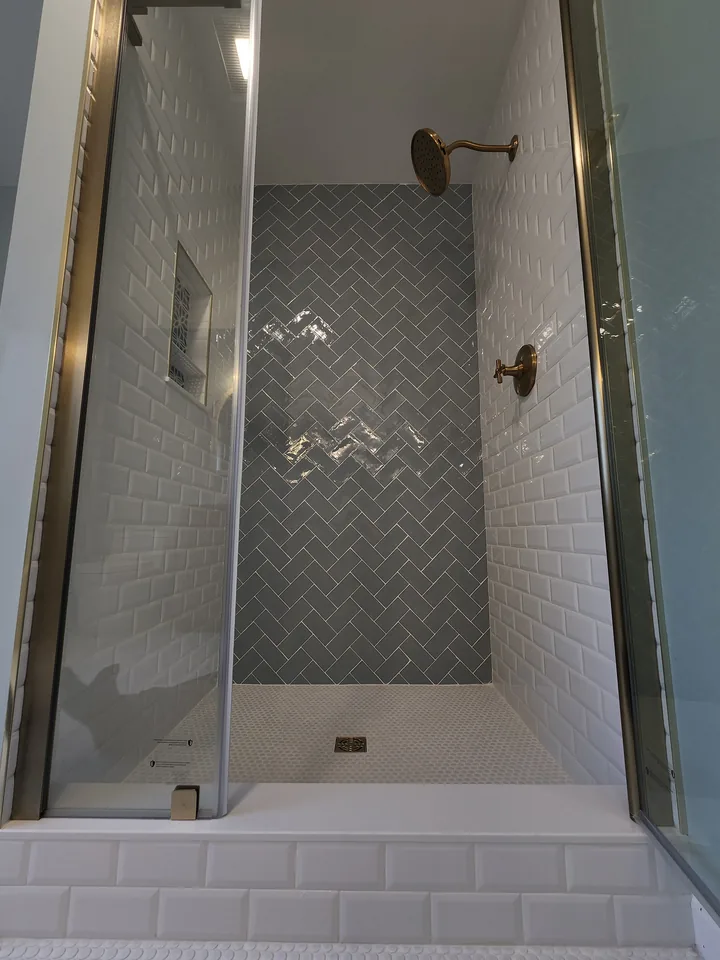
A bathroom floor, a tub surround, and a shower are not the same type of tile area. The first planning step is to define where water is expected, what assembly supports the finish, and which room details have to meet the tile cleanly.
Define every surface that belongs to the project
List the shower walls and base, tub surround, bathroom floor, vanity backsplash, niche, bench, curb, half wall, or other feature separately. This avoids treating the room as one undifferentiated square-foot number and makes it easier to discuss different tile, edge, and transition needs.
Mark what is staying and what is changing: tub, vanity, toilet, plumbing locations, shower glass, wall framing, door casing, and adjacent flooring. A layout that works for one arrangement may need to change when a valve, drain, vanity, or glass panel moves.
In a shower, the tile is not the waterproofing
Tile and grout are finish materials; they are not a complete waterproof barrier by themselves. A shower needs a water-management assembly that accounts for the base, walls, corners, penetrations, curb or entry, and drain connection. The pieces have to work as one system behind the visible finish.
Ask how the shower area will manage water before focusing on grout color. If you are discussing work on an existing shower, share any history of leaks, recurring discoloration, soft materials, persistent odor, or repairs. Those signs do not diagnose the cause from a photo, but they matter when deciding whether surface work is appropriate.
Fresh grout can improve appropriate joints, but it does not replace a failed waterproofing or drainage assembly.
Coordinate drains, plumbing, glass, and built-ins
The tile layout meets real objects. Valve trim, showerheads, handheld fittings, tub flanges, drains, shelves, niches, benches, grab-bar locations, and glass attachment points should be identified before the visible pattern is finalized.
Drain and slope affect tile format
A shower floor must direct water to its drain. The floor geometry and drain style influence which tile sizes can follow that shape while keeping a practical finished surface. Share the selected drain or existing drain location rather than choosing shower-floor tile in isolation.
Built-ins need finished dimensions
A niche or bench affects framing, waterproofing, edge treatment, grout alignment, and cuts. If you want one, say what it needs to hold and where you imagine it. The final position has to respond to the wall and the rest of the tile layout.
Choose tile for the surface, not only the sample board
A wall tile does not automatically belong on a wet floor. Confirm with the tile manufacturer or supplier that a product is intended for the surface and exposure you have in mind. Texture, finish, format, edge, thickness, and maintenance all matter alongside color.
- Compare several pieces for shade, pattern, and dimensional variation.
- Ask whether coordinating trim or finished edges are available.
- Consider where a different floor, wall, or accent tile will meet.
- Think about grout visibility and cleaning at the scale of the whole room.
- Keep product labels and manufacturer instructions with the material.
Large tile can create a quieter field, while smaller pieces can follow tighter geometry. Neither is universally better. The right choice depends on the specific wall, floor, drain, transitions, and layout.
Show existing conditions without guessing at the cause
Take wide photos from the doorway and each corner, then close photos of cracked joints, loose tile, staining, transitions, plumbing penetrations, the drain, and areas that stay damp. Say whether the symptom is new, recurring, or connected to a known leak or previous repair.
For a new bathroom, share plans or sketches if they exist, along with photos of the current room. For a focused update, identify what must remain. Photos start the scope discussion, but hidden substrate and moisture conditions may require a closer look.
When you text David, include your town or ZIP, the surfaces you want tiled, what is changing, the products you are considering, and any known condition that could affect the assembly.
Bathroom and shower tile questions
Does sealing grout make a shower waterproof?
No. Some grout products may benefit from a compatible sealer for stain or moisture resistance, but a sealer is not a substitute for the shower’s waterproofing and drainage assembly.
Can I use the same tile on the bathroom wall and shower floor?
Possibly, but only if the product is suitable for each surface and the shower-floor geometry can accommodate its format. Confirm the intended uses with the manufacturer or supplier and discuss the drain and slope.
Should plumbing and shower glass be planned before tile?
Yes. Their locations and attachment details interact with the substrate, waterproofing, layout, edges, and penetrations. Share what is selected and who is coordinating each part.