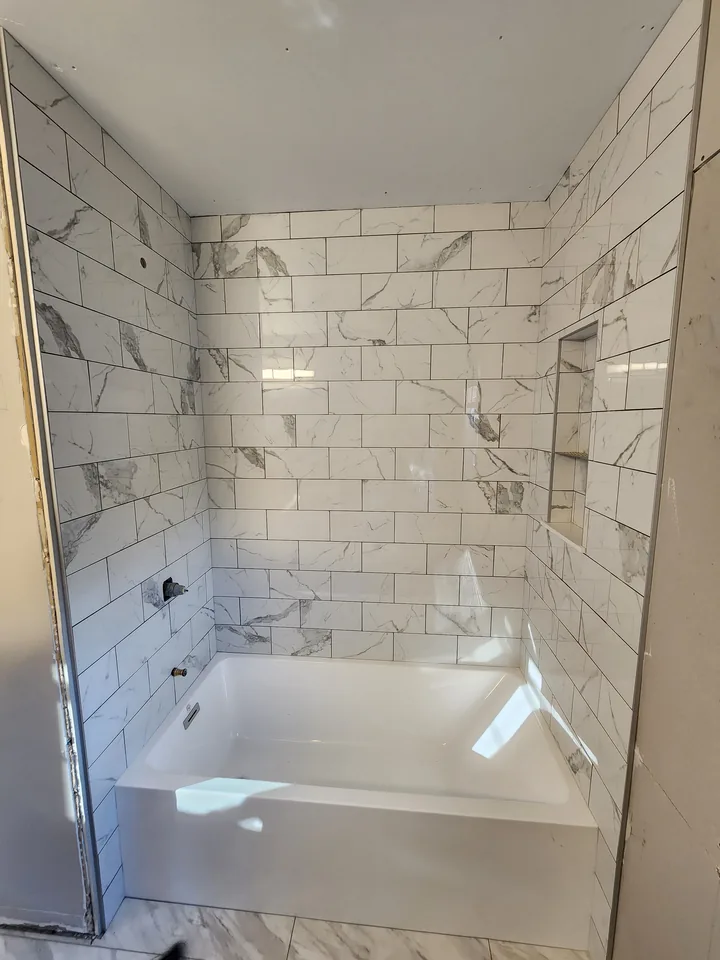
Grout is the visible material between tiles, but a cracked or missing joint can be a surface problem or a clue that something else is moving. The practical choice depends on the condition of the tile, its bond, the supporting surface, and any moisture history.
First, name what you can actually see
Separate appearance from physical failure. Soil, soap film, or discoloration may call for cleaning rather than removal. Eroded, powdery, missing, or poorly bonded joints are different. A cracked tile, a tile that moves under light pressure, or repeated cracking in the same line deserves a wider assessment.
Note where the symptom occurs and whether it is isolated or repeated. A close photo shows the joint; a wider photo shows whether the line continues across a floor, meets a doorway, follows a corner, or sits near a wet area.
Dark or uneven grout can reflect soil, moisture, product variation, or other conditions. The physical state of the joint and the surrounding tile matter more than color by itself.
When regrouting may be the appropriate conversation
Regrouting is most promising when the tile is secure, the supporting area appears sound, and the concern is limited to worn or deteriorated grout joints. The old material still has to be removed to a suitable depth and the joints prepared for the replacement product; spreading a thin layer over existing grout is not a reliable repair.
- The tile is not visibly cracked or moving.
- Joint wear is the main issue rather than a recurring line of movement.
- There is no known active leak or soft surrounding material.
- The area and tile edges allow the joints to be worked without unreasonable damage risk.
These signs are a starting point, not a remote diagnosis. Tile type, joint width, previous products, access, and the condition beneath the surface can change what makes sense.
When a tile repair or deeper review may be needed
A loose or broken tile is not corrected by replacing the grout around it. Cracked grout can also return when the underlying cause is movement, deflection, loss of bond, or another assembly problem. A repair should address the failed component and, when possible, the reason it failed.
Share any of these conditions clearly:
- Tile that shifts, rocks, lifts, or has separated from the surrounding field.
- Cracks that cross tile as well as grout, or repeat in the same path.
- Soft, swollen, stained, or persistently damp material nearby.
- Previous patches that failed again.
- Missing trim, damaged edges, or no spare matching tile.
A different sound when a tile is tapped does not by itself prove imminent failure. Visual condition, movement, bond, substrate, and the installation method all matter. If there is active leakage or visibly wet or soft material, limit use of the affected area and arrange for a prompt assessment.
Corners and transitions need room for movement
Where tile changes plane or meets a different surface, the adjoining materials can move independently. Those locations are commonly treated as movement joints with an appropriate flexible sealant rather than filled as an ordinary rigid grout joint.
A crack that repeatedly follows a wall-to-floor joint, counter-to-backsplash joint, or inside corner may be telling you that the joint treatment needs review. Replacing rigid material with more rigid material does not remove the movement.
Wet-area corners need two separate questions
Ask both whether the visible joint needs maintenance and whether there are signs of a moisture-management problem behind it. A surface sealant joint and the waterproofing assembly perform different jobs.
Photograph the problem and its context
- One full-room view. Show where the area sits and how it is used.
- One medium view. Include the entire tile field or continuous crack line.
- Close photos. Capture missing grout, tile cracks, edges, corners, staining, or separation in focus.
- Spare material. Photograph any matching tile, trim, package label, or leftover grout information.
- A short history. Say when you noticed it, whether it changed, whether it was repaired before, and whether moisture or movement is involved.
Include your town or ZIP and say whether your goal is appearance, stopping continued deterioration, replacing a damaged tile, or understanding the cause. David can then discuss whether the project aligns more closely with regrouting, tile repair, or a closer inspection.
Regrouting and repair questions
Can new grout be applied directly over old grout?
A thin surface layer is not a dependable repair. Existing grout needs to be removed and the joint prepared to a suitable depth for the replacement material, while protecting the tile edges.
Will regrouting stop a shower leak?
Not if the leak comes from the waterproofing, drain connection, plumbing, or another part of the assembly. Grout is not the shower’s waterproof barrier.
What if I do not have spare matching tile?
Send a clear photo and any product information you have. Availability, acceptable visual differences, the location of the repair, and the risk to surrounding tile all affect the options.